
Where Is CKD Drug Development Going Next?
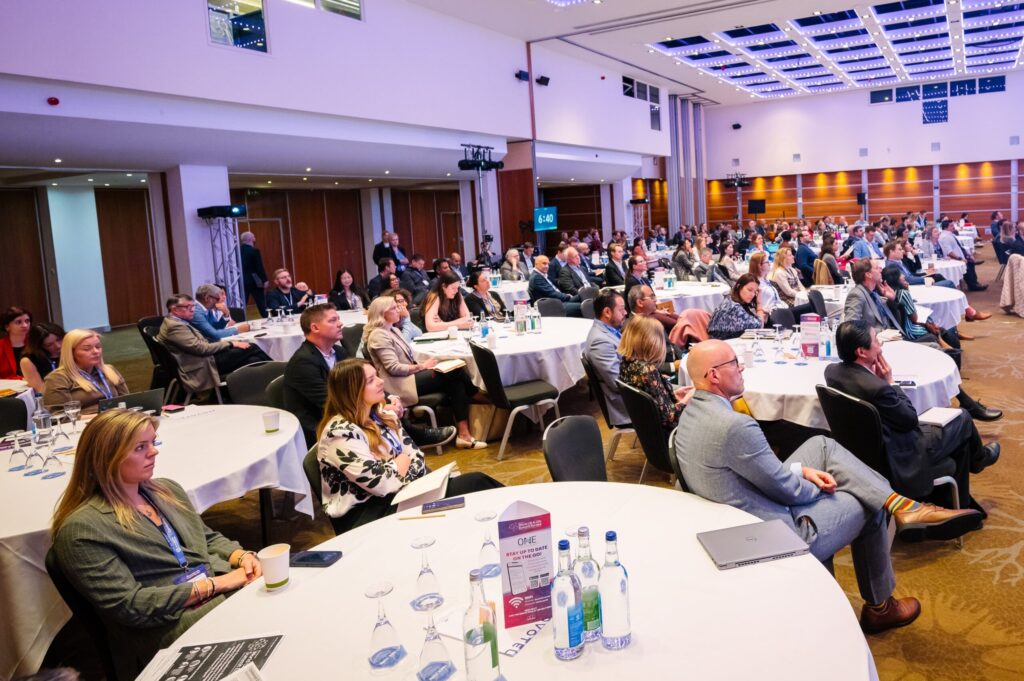
The CKD field is entering a more demanding phase of innovation. New approvals have validated renal drug development, but expanding standard of care, heterogeneous biology and increasingly segmented patient populations make the next programs harder to differentiate. The 9th CKD Summit is designed around those real decisions: where residual risk remains, how to select the right patients and modalities, how to generate earlier evidence of benefit, and how to turn emerging renal biology into therapies that can succeed clinically and commercially.
What to Expect
Precision Nephrology Becomes Practical
Move beyond the umbrella diagnosis of CKD by connecting genetics, cell states, multi-omics and disease phenotype with target selection and patient stratification.
Prove Benefit Earlier
Challenge reliance on long-duration eGFR outcomes alone by examining GFR slope, hierarchical composite endpoints, molecular and tubular biomarkers, natural history and real-world evidence.
Follow New Modalities into the Kidney
Compare kidney-targeted AAV, RNA and LNP approaches, cell-specific delivery and modality selection as renal delivery moves from theoretical barrier to active clinical-development question.
Look Beyond Today’s Rare Kidney Success
Examine where FSGS, membranous nephropathy, Alport syndrome, PKD and other under-served indications could offer the next high-value drug development opportunities as IgAN becomes increasingly competitive.
Design Trials for the Standard of Care You Will Actually Face
Work through placebo ethics, background SGLT2/GLP-1/MRA therapy, narrow genetic populations, recruitment pressure, and platform, basket and decentralised approaches.
Connect Discovery with the Clinic
Use human data, translational biomarkers, and back-translation to improve target confidence, model choice, and Phase I/II decision-making rather than treating discovery and clinical development as separate conversations.
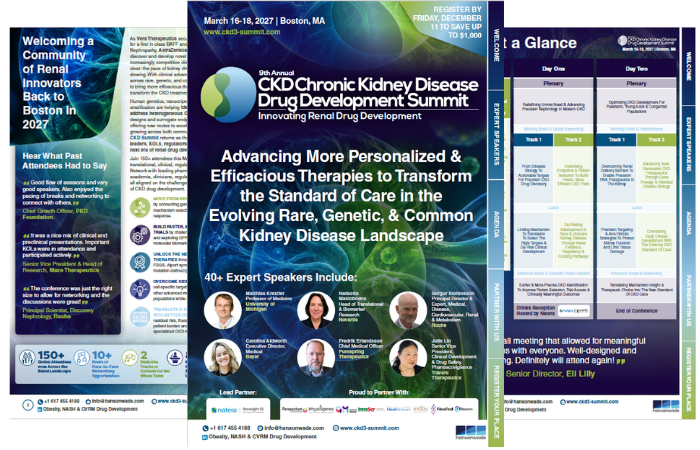
Explore the Full Event Guide
- See the full 3-day journey from rare & genetic disease strategy through discovery, clinical development and implementation
- Meet the 40+ confirmed speakers shaping current CKD R&D decisions
- Preview data-led case studies spanning IgAN, FSGS, PKD, fibrosis, AAV, RNA delivery and precision nephrology
- Compare the three interactive workshops on CKD models, trial design and next-generation endpoints
- Share one concise source of agenda, faculty and networking information with your wider renal team
Attending Companies Include
Explore the Agenda
Follow the decisions shaping renal R&D, from target validation and kidney-specific delivery to proof-of-concept, endpoints and treatment strategy.
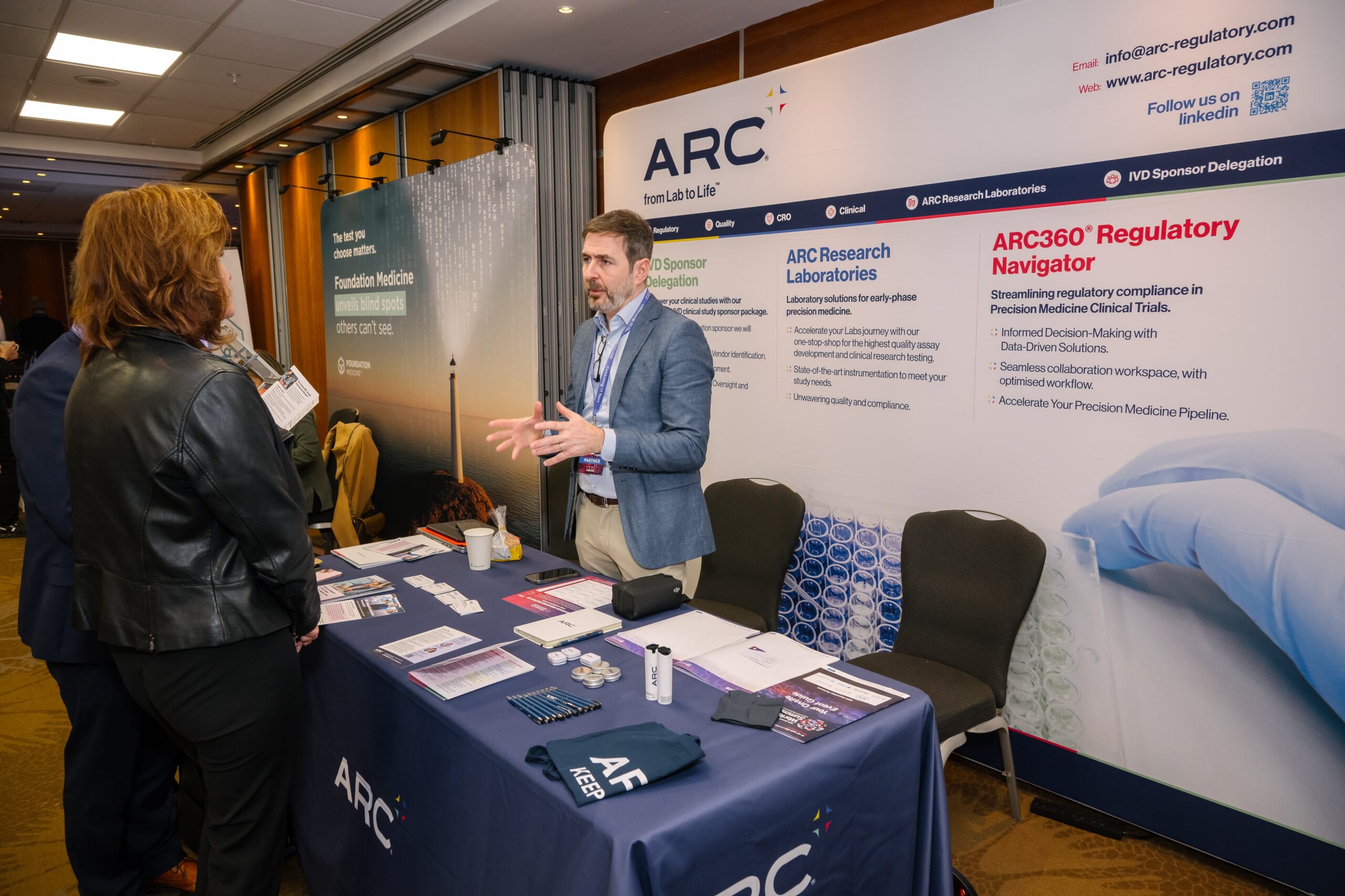
Partner With Us
Put your renal expertise in front of teams actively seeking better models, biomarkers, patient-finding tools and clinical development support.
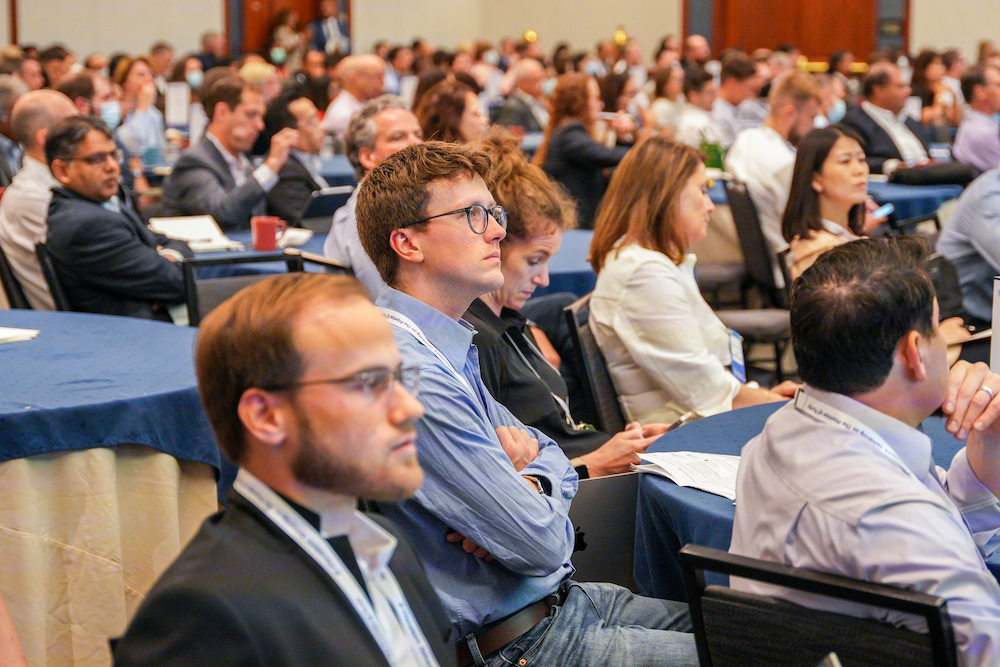
Join the CKD Community
Build relationships across discovery, translational, clinical, regulatory and medical teams working on common, rare and genetic kidney disease.